

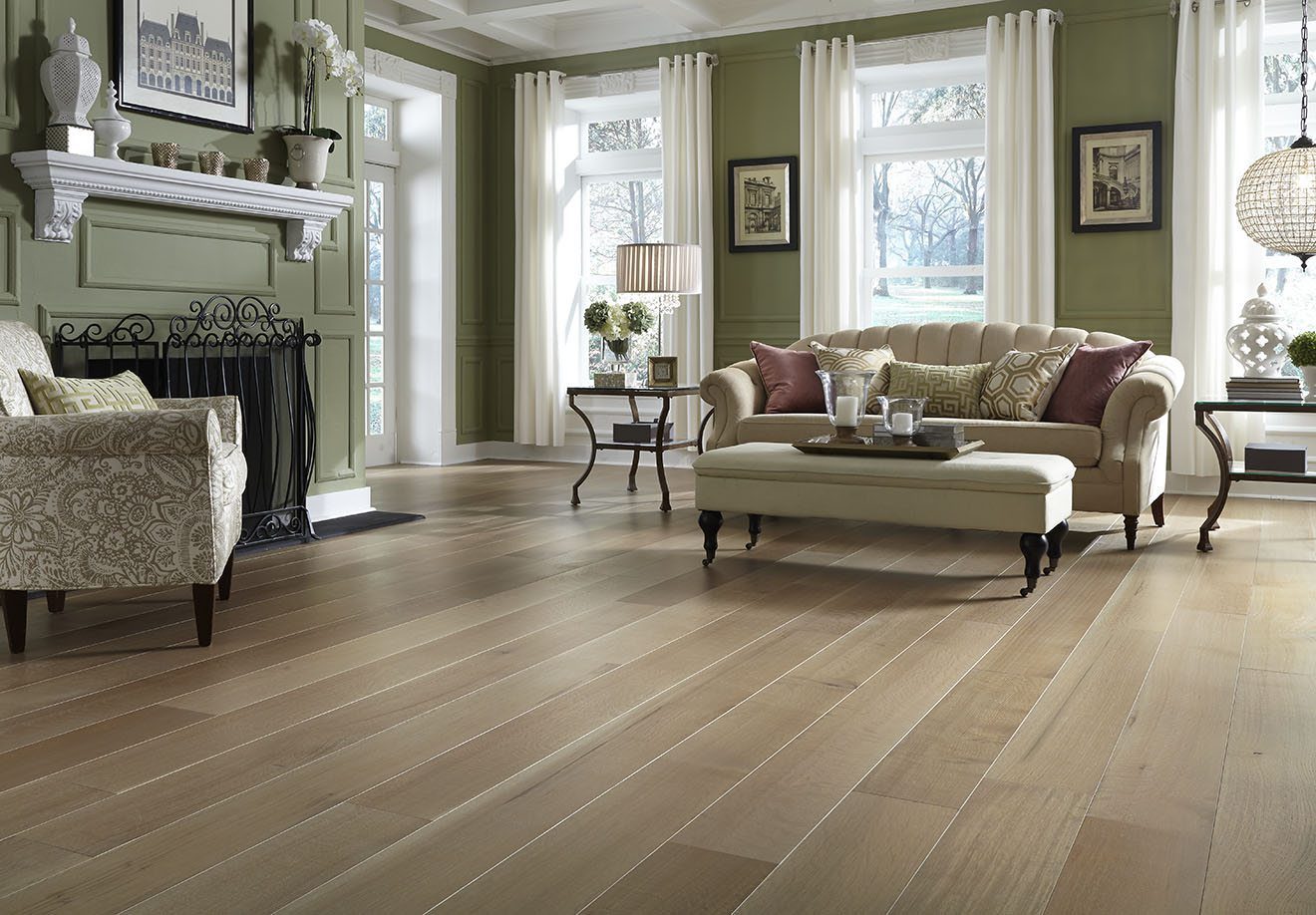
You fall in love with a hardwood sample in the showroom, but a thought nags at you: “Will this warp in our humidity?” Between summer thunderstorms, high moisture, and the occasional hurricane, our coastal climate can be tough on wood. The good news is that when you pair the right species with the right construction, hardwood can still be a smart, long-lasting choice.
Below, we’ll walk through which species handle moisture better, why engineered construction matters so much here, and how installation and maintenance tie everything together.
Why Engineered Hardwood Is Usually the Safer Bet
In a humid subtropical climate, wood constantly takes on and releases moisture. Solid boards move more with those changes, which can lead to cupping or gaps if the home isn’t well controlled. Engineered hardwood is built to handle that movement better.
Instead of a single solid piece, engineered planks use a real hardwood veneer on top of a layered core, which is designed to expand and contract in a more controlled way. When you browse our hardwood flooring collection, you’ll see both solid and engineered options, but for most homes here, we usually recommend engineered—especially for wider planks or open-concept layouts.
Professional prep and acclimation are just as important as the product itself. Our licensed flooring installers check moisture levels, leave expansion gaps where needed, and advise on underlayment so your floor can move naturally without visible damage.
Oak: The Workhorse for Humid Homes
If you want classic hardwood that plays nicely with humidity, oak is a strong contender. Its grain pattern and natural stability make it one of the most forgiving choices in our area.
White and red oak both handle seasonal changes reasonably well when installed correctly, and their pronounced grain helps hide everyday wear from sand, pets, and kids. In vacation rentals or busy households, that camouflage matters as much as raw hardness.
Oak also comes in a wide range of colors and finishes, from coastal light tones to deeper, traditional looks. You can sort by species and color in our hardwood catalog if you’re trying to narrow down options before visiting the showroom.
If you like the look of wood in areas that see more splashes—like kitchens near back doors—it can be helpful to compare hardwood to other materials. Many homeowners like to pair wood in main spaces with moisture-tough surfaces from our tile flooring catalog in bathrooms and laundry rooms.
Hickory and Maple: When You Need Extra Muscle
Some homes see tougher conditions: large dogs, constant sand from beach trips, or heavy foot traffic from guests. In those cases, harder species like hickory and maple can add extra durability—but they each behave a bit differently in humidity.
Hickory is one of the hardest domestic woods and holds up well to dents. Its bold, varied grain also disguises scratches and small gaps better than smoother species. In engineered form, hickory can be a great choice for busy living rooms and hallways as long as indoor humidity stays reasonably stable.
Maple offers a clean, modern look with a tighter grain. It’s also quite hard, but because the grain is more subtle, surface scratches and seasonal seams can be more noticeable. If you’re drawn to maple, choosing an engineered construction and a matte or wire-brushed finish will usually give you a more forgiving floor.
If you’re considering mixing wood with other surfaces—say, hardwood in common areas and something softer in bedrooms—it can help to preview textures and colors together. Our online carpet collection is a useful tool if you’re planning that kind of blended layout.
Installation, Humidity Control, and Everyday Care
Even the best species can fail if installation and indoor conditions aren’t right. Think of your hardwood as part of a system that includes the subfloor, HVAC, and daily habits.
A good installer will test concrete slabs for moisture, recommend vapor barriers where needed, and acclimate planks long enough for them to adjust. That’s why we build moisture checks and post-install guidance into our installation services, whether the project is a quiet home or a busy rental near the coast.
After the floor is down, keeping relative humidity in a reasonable range—typically around 35–55%—helps minimize movement. Simple habits like using doormats, sweeping up sand, and wiping spills quickly go a long way. If you want to see how real projects look once they’re lived in, our project gallery shows installed hardwood, tile, and vinyl in local homes.
Choosing hardwood in a humid climate doesn’t have to be a gamble. When you match the right species—often engineered oak, hickory, or maple—with thoughtful installation and realistic maintenance, you can enjoy the warmth of wood without constant worry. If you’re ready to compare options in person and talk through what fits your home and lifestyle, you can request a free flooring estimate and we’ll help you plan the next steps.


